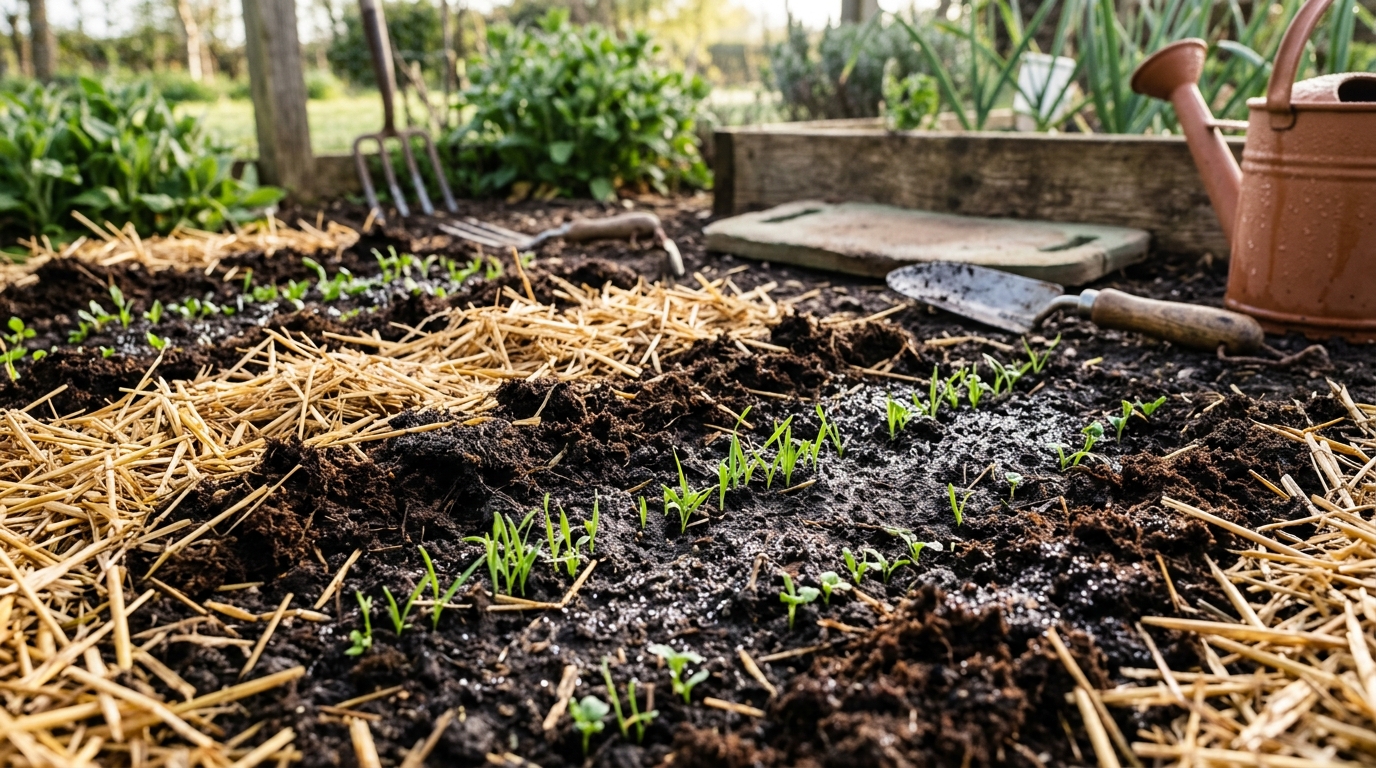
Covering newly seeded areas with straw or peat moss is one of the most effective ways to improve germination rates. The covering retains soil moisture, shields seed from birds and wind, prevents erosion on slopes, and moderates soil temperature. Without covering, germination rates can drop by 30–50% in hot or windy conditions.
How Much Straw to Use
The standard straw coverage rate is 1–2 bales per 1,000 sq ft (roughly 1 bale per 500 sq ft for a thin, even layer). The goal is to cover about 50–75% of the soil surface — you should still be able to see soil through the straw.
| Lawn Area | Straw Bales Needed (Light Cover) | Straw Bales Needed (Standard Cover) | Approx. Cost |
|---|---|---|---|
| 500 sq ft | 1 | 1–2 | $5–$12 |
| 1,000 sq ft | 1–2 | 2–3 | $10–$18 |
| 2,500 sq ft | 3–4 | 5–6 | $25–$36 |
| 5,000 sq ft | 5–7 | 10–12 | $50–$72 |
| 1 acre (43,560 sq ft) | 44–58 | 87–100 | $435–$600 |
Hay contains weed seeds and grain seeds that will germinate alongside your grass seed, creating a major weed problem. Always use clean, seed-free straw — wheat straw or pine straw are the best options. Ask your supplier for “certified weed-free” straw if available.
How Much Peat Moss to Use
Peat moss is applied as a thin top-dressing (about ¼ inch thick). The standard rate is 1 cubic foot per 50 sq ft of seeded area, or roughly 1 compressed bale (3.8 cu ft) per 190 sq ft.
| Lawn Area | Peat Moss Needed (cu ft) | 3.8 cu ft Bales | Approx. Cost |
|---|---|---|---|
| 100 sq ft | 2 | 1 | $8–$12 |
| 500 sq ft | 10 | 3 | $24–$36 |
| 1,000 sq ft | 20 | 6 | $48–$72 |
| 2,500 sq ft | 50 | 14 | $112–$168 |
| 5,000 sq ft | 100 | 27 | $216–$324 |
Straw vs. Peat Moss vs. Other Mulch — Which Should You Use?
| Material | Cost / 1,000 sq ft | Moisture Retention | Weed-Seed Risk | Best For |
|---|---|---|---|---|
| Wheat Straw | $10–$18 | Good | Low (if clean) | Large areas, slopes, budget jobs |
| Peat Moss | $48–$72 | Excellent | None | Small areas, precision, premium lawns |
| Compost (thin layer) | $30–$50 | Very Good | Low–Med | Overseeding, nutrient boost |
| Erosion Blanket | $50–$100 | Good | None | Steep slopes, erosion control |
| Tackifier / Hydromulch | $80–$150 | Good | None | Large commercial projects |
How to Apply Cover Material Without Smothering Seed
The #1 mistake is applying too thickly. Seed needs light to germinate for many grass types, and a thick mat blocks both light and air circulation.
- Straw: Spread by hand, pulling apart flakes from the bale. You should see 50% of the soil through the straw. If you can’t see any soil, you’ve applied too much.
- Peat moss: Spread evenly at ¼ inch thick maximum. Use a peat moss spreader or rake. Dampen it immediately after spreading — dry peat moss is hydrophobic and will blow away.
- On slopes: Use straw and anchor with landscape staples or erosion netting. Peat moss slides on slopes and is not suitable for grades over 10%.
After spreading straw, look down. If you can see about half the soil surface through the straw, you’ve nailed the right thickness. This provides moisture retention without smothering. If the area looks like a solid straw mat, rake some off.
When to Remove or Leave the Covering
Thin straw: Leave it in place. A properly thin layer decomposes naturally within 2–4 weeks and adds organic matter to the soil. Do not rake new seedlings.
Thick straw clumps: If any thick spots formed (common on windy sites), carefully lift them once grass reaches 2–3 inches. Don’t drag a rake — gently lift clumps to avoid pulling out seedlings.
Peat moss: Never needs removal. It integrates into the soil surface as you water and becomes part of the growing medium. This is one of peat moss’s key advantages over straw.
Frequently Asked Questions
Does straw stop grass from growing?
No — when applied as a thin, even layer (about 50% soil visibility), straw helps grass grow by retaining moisture and protecting seed. Only thick, matted straw blocks growth. Remove any thick clumps after germination begins.
Can I use hay instead of straw?
Hay is NOT recommended. Unlike straw, hay contains weed seeds and grain seeds that will germinate alongside your grass seed, creating a weed problem that can take years to resolve. Always use clean, seed-free wheat straw or pine straw. The price difference is minimal but the weed-free benefit is enormous.
Do I need to remove straw after grass grows?
A thin layer decomposes naturally within 2–4 weeks and doesn’t need removal. Thick layers or clumps should be carefully lifted (not raked) once grass reaches 2–3 inches to prevent smothering. Never drag a rake over new seedlings.
Is peat moss better than straw for grass seed?
Peat moss retains more moisture and has zero weed-seed risk, making it superior for small, precise areas and premium lawns. However, it costs 3–5x more than straw and isn’t practical for large lawns. For areas over 2,000 sq ft, straw is the more cost-effective choice.