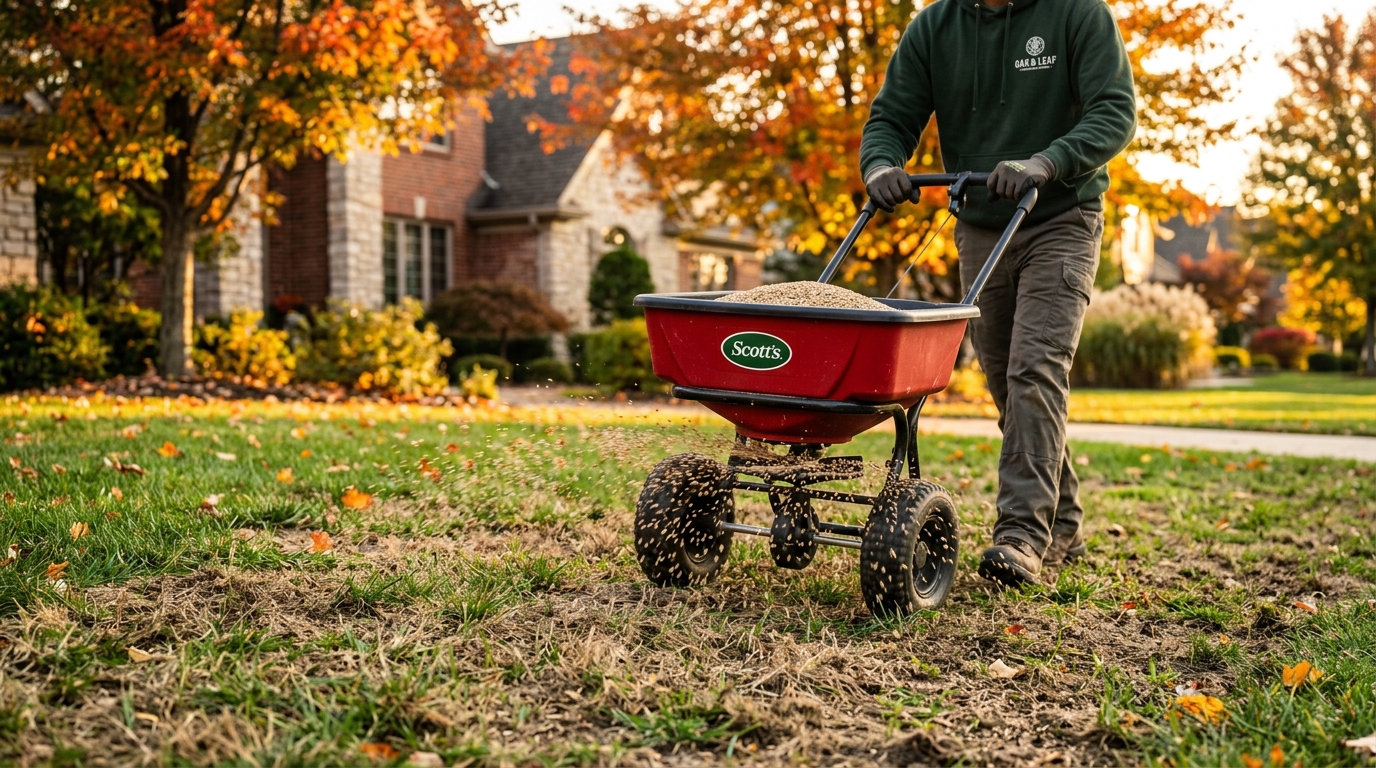
Overseeding uses roughly half the seed rate of a new lawn because existing turf already covers much of the ground. This means a 5,000 sq ft lawn that would need 45 lbs of Tall Fescue for a new installation only needs about 22.5 lbs for overseeding. Getting the rate right is critical — too much seed overcrowds seedlings, and too little leaves gaps.
Select “Overseeding” mode and enter your lawn dimensions for instant results.
Open Overseeding CalculatorOverseeding Rates by Grass Type
| Grass Type | New Lawn (lbs/1,000 ft²) | Overseeding (lbs/1,000 ft²) | New Lawn (g/m²) | Overseeding (g/m²) |
|---|---|---|---|---|
| Kentucky Bluegrass | 2–5 | 1–2.5 | 10–24 | 5–12 |
| Tall Fescue | 8–10 | 4–5 | 39–49 | 20–24 |
| Fine Fescue | 4–6 | 2–3 | 20–29 | 10–15 |
| Perennial Ryegrass | 7–8 | 3.5–4 | 34–39 | 17–20 |
| Bermuda Grass | 3–4 | 1.5–2 | 15–20 | 7–10 |
| Zoysia Grass | 1–3 | 0.5–1.5 | 5–15 | 2–7 |
When to Overseed (Seasonal Timing by Grass Type)
Timing is arguably more important than seed quantity. Plant at the wrong time and germination rates plummet.
| Grass Type | Best Time | Second Best | Avoid |
|---|---|---|---|
| Cool-Season (KBG, Fescue, Ryegrass) | Early Fall (Aug 15 – Sep 30) | Early Spring (Mar 15 – Apr 30) | Summer (heat stress) |
| Warm-Season (Bermuda, Zoysia) | Late Spring (May 1 – Jun 15) | Early Summer (Jun 15 – Jul 15) | Fall/Winter (dormancy) |
In fall, soil is still warm from summer (promotes germination), air is cooling (reduces heat stress on seedlings), weed competition drops, and natural rainfall increases. This combination makes fall overseeding 3–5x more successful than spring overseeding.
Step-by-Step: How to Overseed a Lawn
- Mow short (1.5–2 inches): Lower your mower to its shortest setting. This allows seed to reach the soil instead of sitting on top of grass blades. Bag the clippings.
- Dethatch or aerate: Remove the thatch layer (dead grass buildup) with a power dethatcher or core aerator. Seed needs direct soil contact to germinate. Core aeration is ideal — it creates thousands of small holes for seeds to settle into.
- Spread seed at the overseeding rate: Use a broadcast spreader for even coverage. Apply at 50% of the new-lawn rate. Make two perpendicular passes at half the spreader setting for the most uniform coverage.
- Cover lightly: Apply a thin layer of peat moss, compost, or fine topsoil (1/4 inch). This retains moisture and protects seed. For full guidance, see our straw and peat moss covering guide.
- Water immediately and consistently: Light, frequent watering (2–3 times daily, 5–10 minutes each) until seedlings are 2 inches tall. Then transition to deeper, less frequent watering.
- First mow at 3–4 inches: Wait 3–4 weeks after germination. Use a sharp blade and remove no more than 1/3 of the blade height.
Common Overseeding Mistakes
Frequently Asked Questions
Can you overseed with a new grass type?
Yes, but stick to the same season type. Overseeding a Kentucky Bluegrass lawn with Perennial Ryegrass (both cool-season) works well. Adding Tall Fescue to thin out a bluegrass lawn is also common. Avoid mixing warm-season and cool-season grasses long-term — their growth cycles conflict.
How soon can you mow after overseeding?
Wait until new seedlings reach 3–4 inches tall (typically 3–4 weeks after germination). Set the mower to its highest setting and never remove more than 1/3 of the blade height. Use a sharp blade to prevent tearing young seedlings.
Do I need to aerate before overseeding?
Core aeration before overseeding dramatically improves results. It loosens compacted soil, creates pockets for seed-to-soil contact, and improves water/nutrient penetration. If you can’t aerate, at minimum dethatch with a power rake and mow short. The goal is getting seed in direct contact with soil.